
Coconut Fiber vs Coco Peat: Key Differences and Applications
Learn the key differences between coconut fiber and coco peat, their uses, benefits, and why they are essential for agriculture and global industries.
COCONUT
Lenny Septiani
4/17/20262 min read
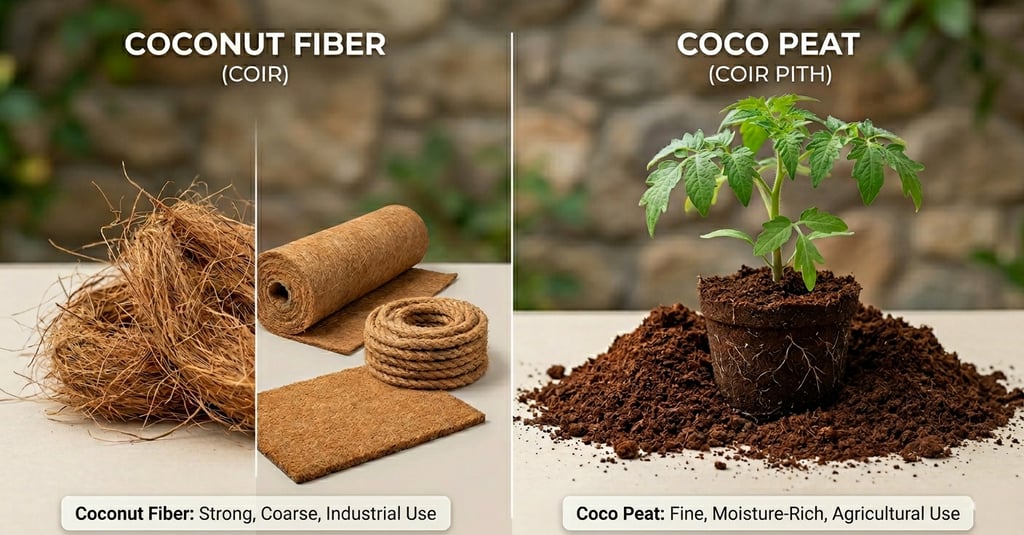
Coconut-based materials have become increasingly popular in global industries, particularly in agriculture, horticulture, and manufacturing. Among the most widely used are coconut fiber (coir) and coco peat. While both are derived from coconut husks, they serve different purposes and offer unique advantages. Understanding their differences is essential for buyers, importers, and businesses looking for reliable and sustainable raw materials.
What is Coconut Fiber (Coir)?
Coconut fiber, also known as coir, is extracted from the outer husk of coconuts. It is a strong, durable natural fiber widely used across various industries.
Key Characteristics:
High tensile strength
Durable and long-lasting
Resistant to saltwater and moisture
Biodegradable and eco-friendly
Common Applications:
Ropes, mats, and carpets
Upholstery and mattresses
Erosion control and geotextiles
Industrial brushes
Coconut fiber is valued for its strength and versatility, making it suitable for both industrial and environmental applications.
What is Coco Peat?
Coco peat, also known as coir pith, is a by-product of coconut fiber extraction. It is a fine, soil-like material with excellent water retention properties.
Key Characteristics:
High water retention capacity
Excellent aeration
Lightweight and easy to handle
Environmentally sustainable
Common Applications:
Soil conditioner and growing medium
Hydroponic farming
Seed starting and plant propagation
Greenhouse and nursery use
Coco peat is widely used in modern agriculture as a sustainable alternative to peat moss.
Key Differences Between Coconut Fiber and Coco Peat
Coconut fiber and coco peat differ significantly in terms of texture, function, and application. Coconut fiber has a coarse and fibrous structure, making it strong and durable, which is ideal for industrial uses such as ropes, mats, and geotextiles. In contrast, coco peat has a fine, soil-like texture with high water retention capacity, making it more suitable for agricultural purposes, particularly as a growing medium for plants. While coconut fiber offers high strength and lower water absorption, coco peat is valued for its ability to retain moisture and improve soil aeration. These differences make each material suitable for specific industries, depending on the intended use.
Why These Products Matter in Global Markets
As industries shift toward sustainable materials, both coconut fiber and coco peat have gained strong demand worldwide. They are renewable, biodegradable, and environmentally friendly, making them ideal alternatives to synthetic materials.
Global buyers increasingly seek reliable suppliers who can provide consistent quality, proper processing, and export-ready products. Indonesia, as one of the largest coconut-producing countries, plays a key role in supplying these materials to international markets.
Sustainability and Environmental Benefits
Both coconut fiber and coco peat support environmentally responsible practices:
Reduce agricultural waste
Replace non-renewable materials
Improve soil health and water efficiency
Support circular economy systems
These advantages make them attractive for industries focused on sustainability and long-term impact.
Conclusion
Coconut fiber and coco peat are two valuable materials derived from the same source but designed for different purposes. Coconut fiber is ideal for industrial and structural use, while coco peat is essential for agriculture and plant growth.
Understanding these differences allows buyers to select the right material for their needs while benefiting from sustainable and reliable sourcing.