
Indonesian Kratom: Sourcing, Quality, and Export Considerations
Discover Indonesian kratom sourcing, quality standards, and key export considerations for international buyers seeking reliable suppliers.
KRATOM
Lenny Septiani
4/18/20262 min read
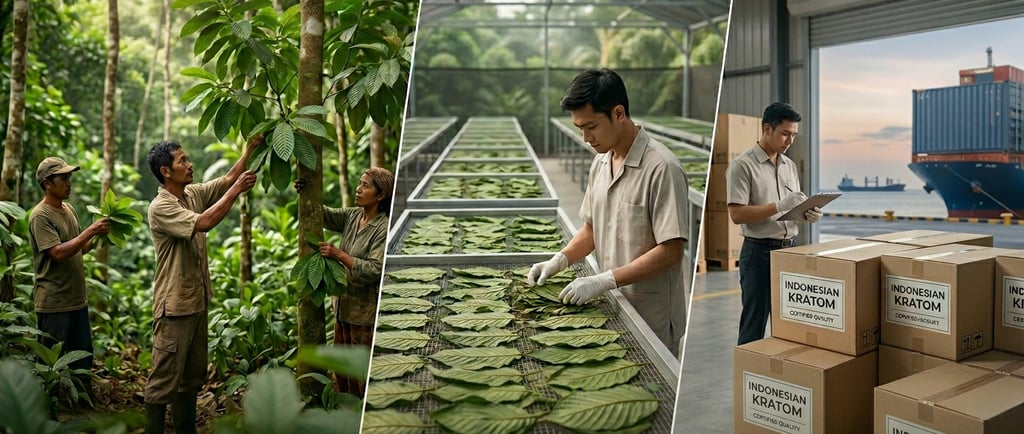

Indonesia is one of the world’s leading suppliers of kratom, particularly from regions such as West Borneo or West Kalimantan. Known for its natural abundance and favorable growing conditions, Indonesian kratom has gained significant attention in global markets. For international buyers, understanding sourcing practices, quality standards, and export considerations is essential when working with suppliers.
Kratom in Indonesia: An Overview
Kratom is derived from the leaves of the Mitragyna speciosa tree, native to Southeast Asia. In Indonesia, especially West Kalimantan, kratom is cultivated and harvested by local farmers who have generations of experience in managing this plant.
The region’s tropical climate, fertile soil, and consistent rainfall contribute to the growth of high-quality kratom leaves, making Indonesia a key supplier for global demand.
Sourcing Practices and Supply Chain
Reliable sourcing is a critical factor in ensuring product consistency and long-term partnerships. In Indonesia, kratom sourcing typically involves:
Direct partnerships with local farmers
Manual harvesting and leaf selection
Sun-drying and processing techniques
Sorting and packaging before export
Working with suppliers who maintain close relationships with producers can help ensure transparency and consistent quality across shipments.
Quality Standards and Product Consistency
For international buyers, product quality is a top priority. Key factors that define kratom quality include:
Leaf maturity and selection
Drying and processing methods
Moisture levels
Cleanliness and contamination control
Consistency between batches
Professional exporters implement quality control procedures to maintain these standards and ensure that products meet buyer specifications.
Export Considerations and Compliance
Kratom is subject to varying regulations across different countries. Buyers must ensure compliance with local import laws and requirements.
Key considerations include:
Understanding the legal status of kratom in the destination country
Proper documentation and export permits
Packaging and labeling requirements
Clear communication between supplier and buyer
Working with experienced export partners can help simplify this process and reduce potential risks.
Global Demand and Market Trends
The demand for kratom continues to grow in various international markets. Buyers are increasingly focused on:
Consistent product quality
Reliable supply chains
Transparent sourcing practices
Long-term partnerships
Indonesia remains a primary source due to its production capacity and established supply network.
Sustainability and Responsible Sourcing
Sustainable sourcing plays an important role in maintaining long-term supply and environmental balance. Supporting local farmers and responsible harvesting practices contributes to:
Community development
Environmental preservation
Stable production for future supply
This approach aligns with global expectations for ethical and sustainable trade.
Indonesian kratom offers significant opportunities for international buyers seeking natural products with strong global demand. However, successful sourcing depends on understanding quality standards, supply chain practices, and export regulations.
By working with reliable partners and maintaining clear communication, buyers can build sustainable and long-term sourcing strategies from Indonesia.